When the World Changed, So Did Our Playbook
A Commentary on the Kreston Global Interpreneur Report by Rocel Magtibay, HR Director at Kreston Helmi Talib
The findings from the Kreston Global Interpreneur Report highlight something that resonates strongly with our own experience at Kreston Helmi Talib (KHT). While balancing global standards with local flexibility emerged as the biggest challenge in maintaining organisational culture, the second-highest challenge of managing differing workforce norms and employee expectations is one we have experienced particularly closely as we expanded into the Philippines.
For us, the challenge was never about taking a distinctly Singaporean culture and trying to replicate it wholesale overseas. Singapore itself is a multicultural society, where people from different ethnic and cultural backgrounds work alongside one another. Respect, inclusivity and understanding differences are already deeply embedded in how we work.
Instead, our experience has taught us that culture is less about where people come from and more about creating a shared understanding of how we work, how we treat one another and what we stand for.
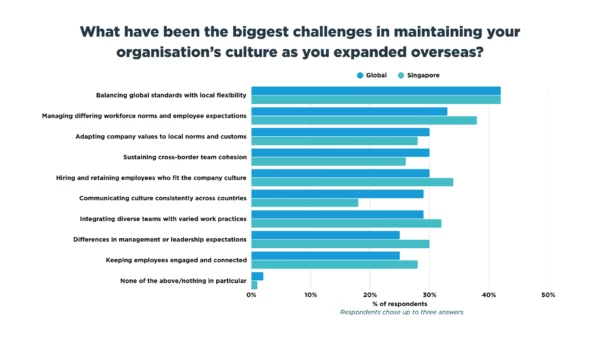
Source: Kreston Global Interpreneur Report 2026
Part 1: When expansion met a changing workforce
When we started our operations in the Philippines, the timing could hardly have been more challenging. The world was in the midst of COVID-19, and businesses everywhere were being forced to rethink how work was done.
Around the world, employers were scrambling to manage hybrid work overnight, a widening skills gap driven by accelerated technology adoption, and rising burnout as the boundary between “work” and “life” disappeared entirely. The Great Resignation wasn’t a headline to us, it was a live risk to a brand-new team we were still trying to build trust with, across borders, cultures and screens.
We quickly learned that opening an office was the easy part. Keeping people and keeping them aligned with what we stood for as a firm was the real test. We had employees working across borders, with different experiences, expectations and ways of working. At the same time, our clients continued to expect the same standards of quality, responsiveness and professionalism regardless of which office was delivering the work.
The question therefore became: How do we remain consistent without expecting everyone to work in the same way?
That distinction was important for us.
Our firm values remain the cornerstone of how we operate. They provide the common language that connects our people across offices. But we also recognised that holding on to our values did not mean holding on to every traditional way of working.
Part 2: How We Addressed It at KHT
The Interpreneur Report’s findings mirrored exactly what we were living through between our Singapore headquarters and our new Philippine office. Our firm values became our anchor: not a poster on the wall, but the filter for every decision we made. That meant putting several concrete changes in place, aligned with both business needs and employee expectations:
- Flexible work stopped being a perk. What was “nice to have” before the pandemic became a baseline expectation after it. We adjusted work arrangements across both offices accordingly. It was not simply about allowing people to work from home. It required us to rethink how teams communicate, collaborate, manage performance and maintain accountability across borders. Most importantly, we had to make sure flexibility worked for both our employees and our clients.
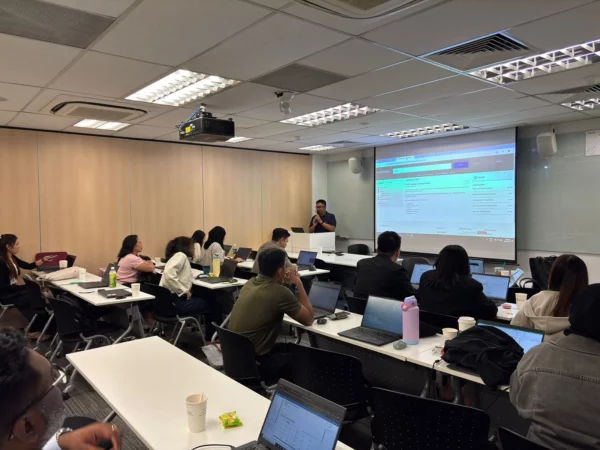
- Technology became another important part of this transition. As our teams became more digitally enabled, we had to upgrade our tools and systems so that employees could collaborate effectively, while ensuring that we continued to meet client expectations, maintained compliance and deliver consistent quality.
- We also placed greater emphasis on upskilling and reskilling our people. Technology can change processes, but it is our people who ultimately determine how effectively those changes translate into better outcomes.
- Leadership moved first. None of these programs work if they exist only on paper. Partners, leaders, and managers had to model the behaviour they wanted to see, consistently and visibly, across both offices.
In that sense, maintaining culture has not meant resisting change. It has meant giving our people the capabilities, tools and flexibility to adapt while keeping a clear understanding of what we stand for.
To hire and retain top talent in this environment, these initiatives had to be in place. Otherwise, our people would simply go to a firm that offered them. As a firm, we had to be responsive and agile to keep up, and that responsiveness became part of our culture rather than a departure from it. The experience also reinforced an important principle for us: local adaptation should not be viewed as a compromise to organisational culture. Done well, it strengthens culture.
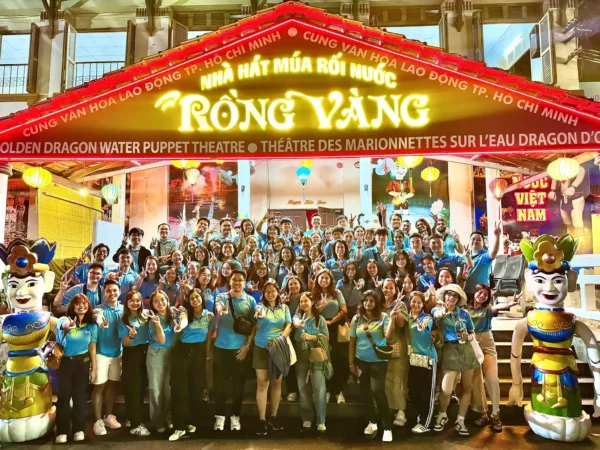
Our Singapore and Philippines teams may have different workforce norms and employee expectations, but they can still be united by the same underlying values and commitment to quality.
Part 3: Practical Tips from Our Experience
Our experience has given us a few practical lessons about managing culture as an organisation grows internationally.
1. Define what is non-negotiable and what isn’t.
Not every practice needs to be replicated across markets. The starting point should be identifying the values and standards that are fundamental to the organisation and distinguishing these from processes or practices that can be adapted locally. Workforce norms shift by generation and geography; what worked in one office will not automatically translate to another.
2. Treat flexibility as an operating model, not just an employee benefit.
Hybrid and flexible working have fundamentally changed expectations about how work gets done. Organisations need to consider the implications for communication, technology, performance management, collaboration and client service and not simply where employees work.
3. Invest in people alongside technology.
Digital transformation can create as many challenges as it solves. As technology changes roles and processes, continuous upskilling and reskilling become essential to keeping people confident, productive and engaged. Make upskilling continuous, not reactive. Waiting until a skills gap shows up in delivery quality means you have waited too long.
4. Build one culture, not identical cultures.
A cohesive international organisation does not require every office to look or operate exactly the same. What matters is having a common set of values and expectations, while giving local teams the space to respond to their own environment.
5. Secure visible leadership buy-in first.
Programs succeed or stall based on whether leader and managers live them daily, not on whether HR announces them.
Closing Thought
Singapore’s own workplace culture has always drawn strength from harmony across difference: a multi-racial society where respect is culturally embedded and where common values give people from different backgrounds a shared language for working together.
Ultimately, our experience has reinforced that international expansion is not simply a geographical exercise. It is an exercise in understanding people.
The hidden challenge is not necessarily maintaining the culture you had before you expanded. It is knowing which parts of that culture must remain constant, and which parts must evolve.
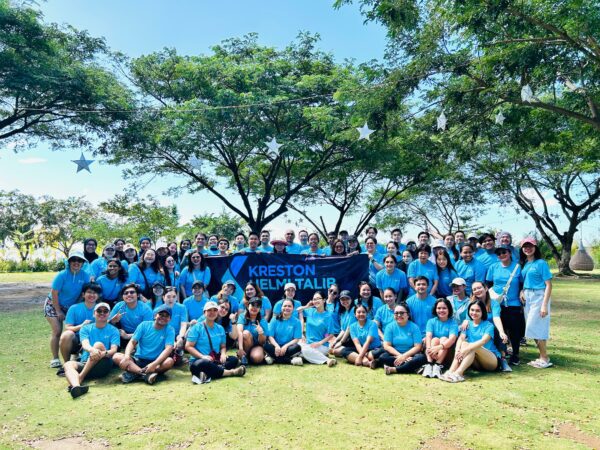
For KHT, our values remain our anchor. But how we apply those values has continued to evolve, shaped by our people, our clients and the markets in which we operate. That, perhaps, is what makes a culture resilient: not its ability to remain unchanged, but its ability to adapt without losing its identity.
The firms that will manage international growth well over the next few years will not be the ones with the fewest differences in workforce expectations. They will be the ones whose values are strong and consistent enough to hold those differences together.